With the rise of hybrid work and new technologies, the office is taking on a new role: becoming an environment where people share knowledge, develop skills, and learn from one another.
For a long time, the office was designed primarily as a place to get work done. Individual workstations, meeting rooms, and support areas structured daily routines around employees’ physical presence.
Today, many activities can be carried out remotely with the support of digital platforms and artificial intelligence tools. This does not diminish the importance of the workplace, but it does broaden the discussion about what makes the in-person experience valuable.
In this context, the office is taking on an important role in activities that depend on human interaction: sharing experiences, building collective knowledge, developing skills, and experimenting with new ideas.
Learning, once associated primarily with formal training, is beginning to take a central role in workplace planning and design.
Learning Is Redefining the Value of Physical Space
The Global Workplace Survey 2026, conducted by the Gensler Research Institute, indicates that learning and human connections are redefining the value of the corporate workplace.
The survey shows that effective learning environments are associated with features such as noise control, flexible furniture, up-to-date technology, areas for focused work, and spaces for taking breaks.
These findings reinforce the idea that workplace learning depends on a combination of conditions involving both interaction among professionals and the quality of the physical environment.
If the way we work is changing, the spaces where people learn must evolve as well.
The Office as an Environment for Continuous Learning
Learning in the workplace goes far beyond the traditional classroom.
Knowledge is shared through training sessions, presentations, workshops, meetings, technical demonstrations, and conversations among professionals from different areas. At times, knowledge is passed from one person to a group. At others, it is built collectively through discussions, experiences, and problem-solving.
These different ways of learning require environments that can adapt to the activities taking place. A room designed exclusively for presentations, for example, may not provide the ideal conditions for a workshop that requires small groups, movement, and active participation.
For this reason, learning needs to be considered when planning corporate spaces, influencing the layout of different areas, furniture selection, and the available infrastructure.
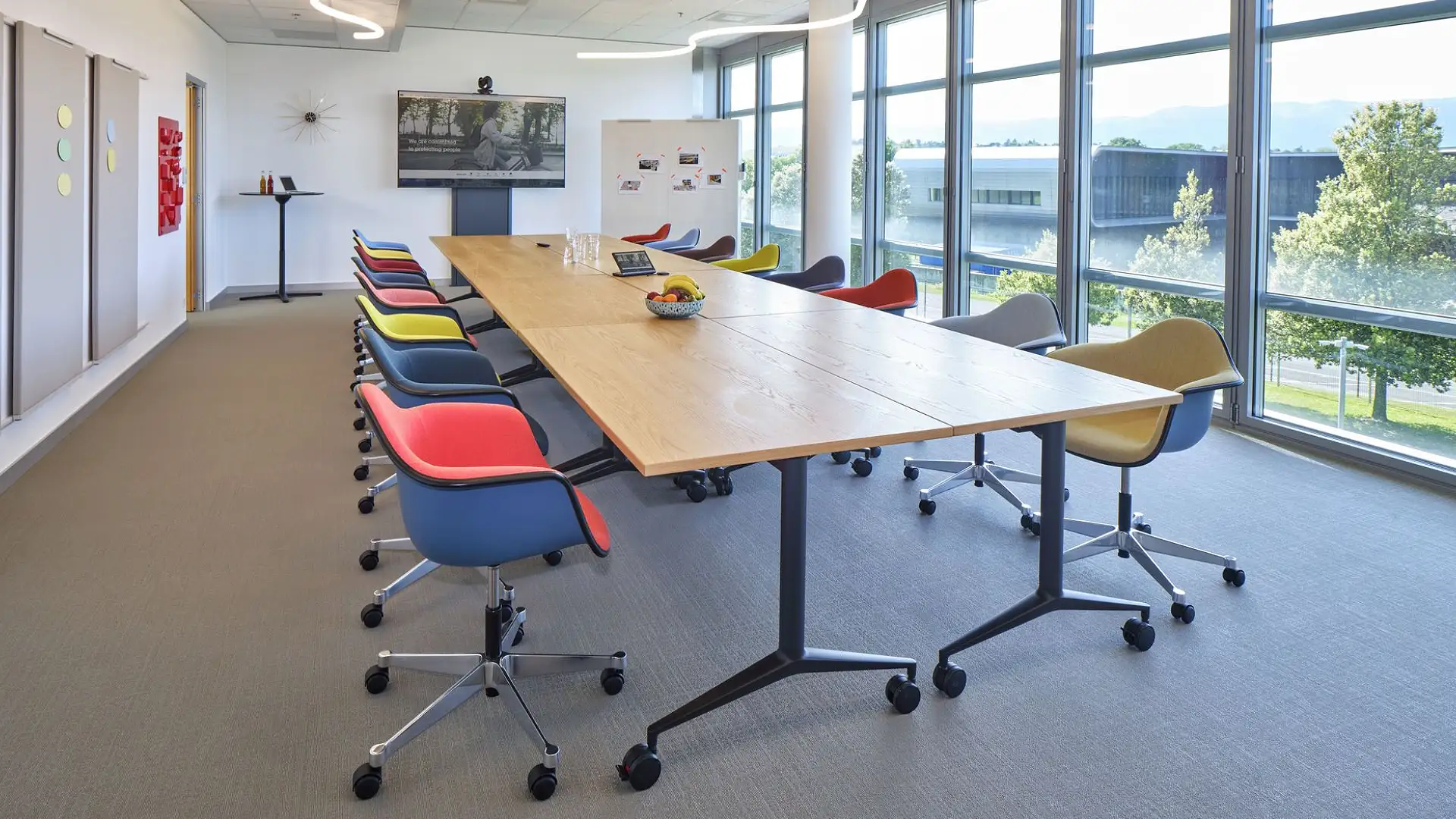
Flexibility: Different Ways of Learning in the Same Space
One of the key characteristics of contemporary learning environments is their ability to adapt. The same room can host a presentation in the morning, a collaborative activity in the afternoon, and a technical training session the following day.
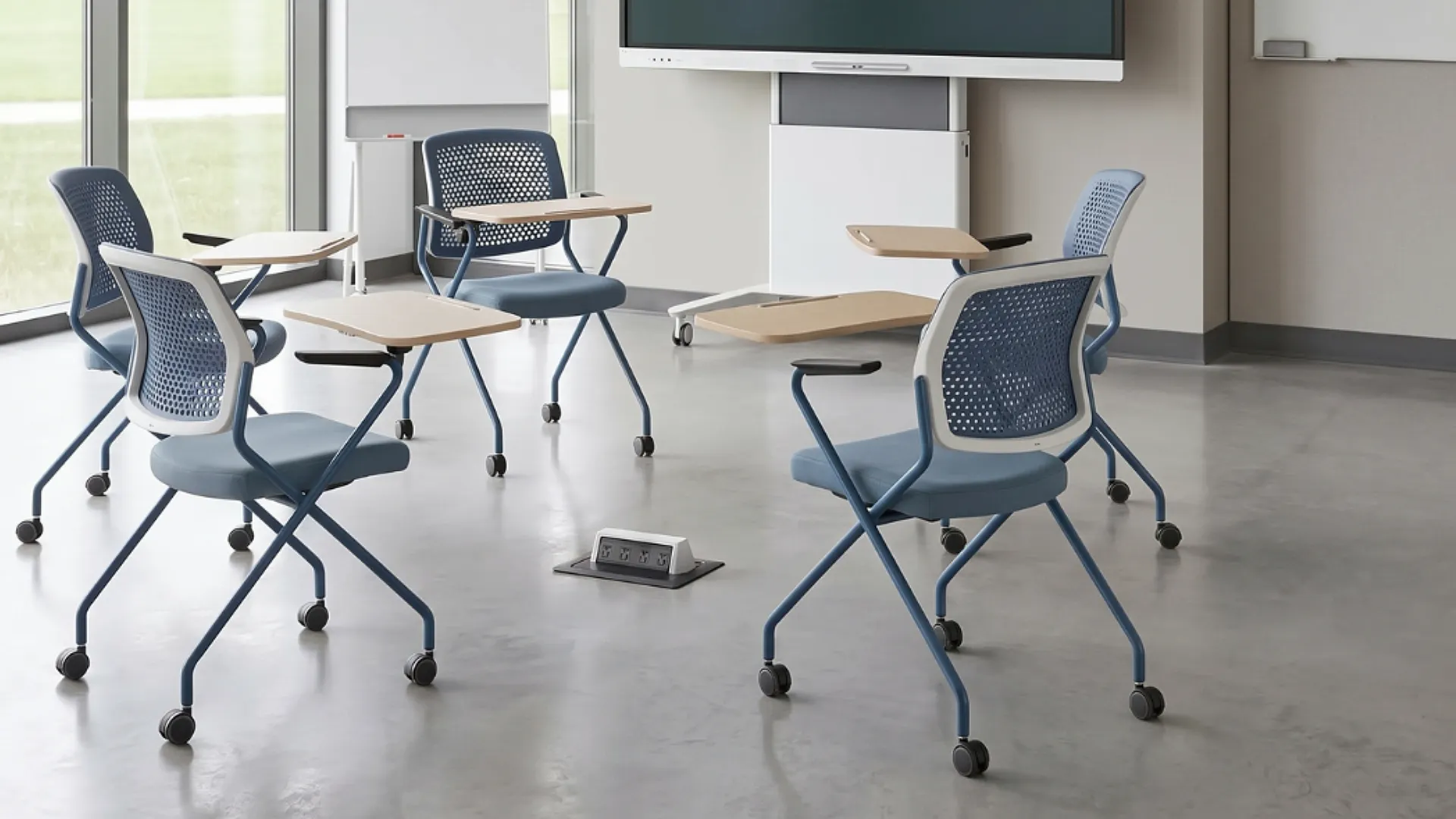
Each situation requires a different spatial arrangement. During presentations, seating may be oriented toward a screen or speaker. For collaborative activities, a circular arrangement or small clusters can encourage participation and the exchange of ideas.
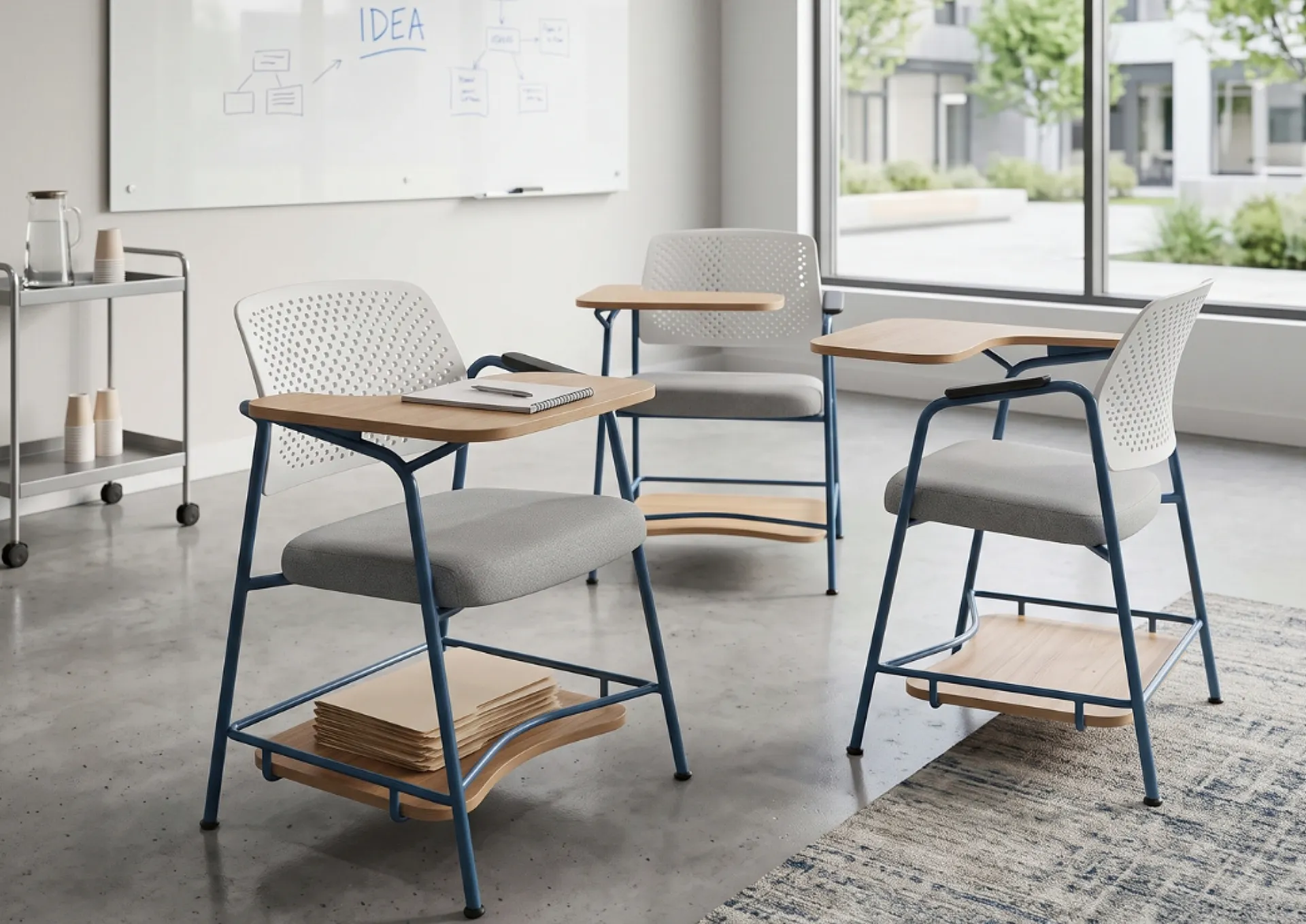
In this context, furniture is no longer simply an element that fills the space; it plays a direct role in shaping how activities take place. Mobile tables, lightweight chairs, seating with writing tablets, and modular solutions make it possible to reconfigure spaces according to specific needs.
Flexibility allows the space to adapt to the activity, rather than forcing the activity to adapt to a fixed configuration.
Furniture as Part of the Learning Experience
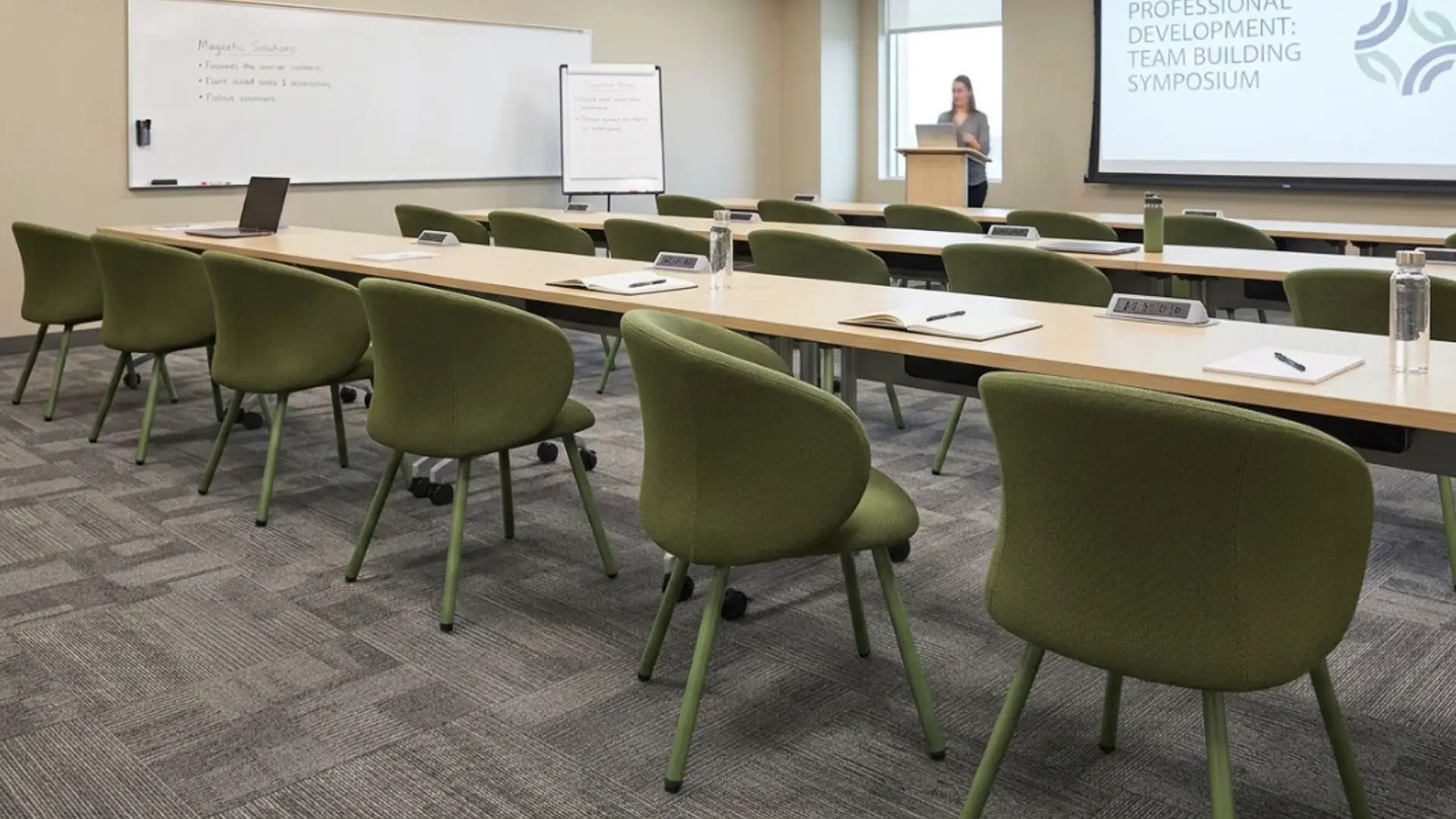
The effectiveness of a training environment depends on more than its capacity to accommodate people. The experience is also influenced by comfort, posture, visibility, circulation, and opportunities for interaction.
For longer activities, for example, seating selection should take into account how long participants will remain seated and how the space will be used. Chairs with proper support and ergonomic solutions help participants remain comfortable during training sessions, presentations, and professional gatherings.
Seating with integrated writing tablets can support activities that require note-taking and the use of devices without necessarily requiring individual tables. In rooms designed to accommodate different configurations, stackable chairs and easy-to-move tables help simplify layout changes.
In auditoriums, seating arrangements, the distance between rows, and viewing angles need to be considered alongside the architectural characteristics of the space. Furniture selection should also reflect the intended purpose of each environment.
Spaces designed for presentations may require different solutions from those intended for workshops, collaborative work, or short-duration activities. This means there is no single configuration capable of meeting every learning need.
Planning should begin with the intended activities and the experiences the space is designed to provide for its users.
Learning Together Also Requires Spaces for Focus
Although interaction among professionals is an important dimension of learning, it does not represent the entire process. Learning also requires concentration, reflection, and individual moments to organize information and absorb new knowledge.
After participating in a workshop, for example, an employee may need a quiet environment to review the content or apply what they have learned. For this reason, a learning-oriented workplace should not consist exclusively of open and collaborative areas.
It is important to balance spaces for interaction with quiet environments, focus areas, and places to rest.
The goal is not to turn the entire office into a classroom, but to create the conditions for learning to happen naturally throughout the day.
Auditoriums and Training Rooms Gain New Possibilities for Use
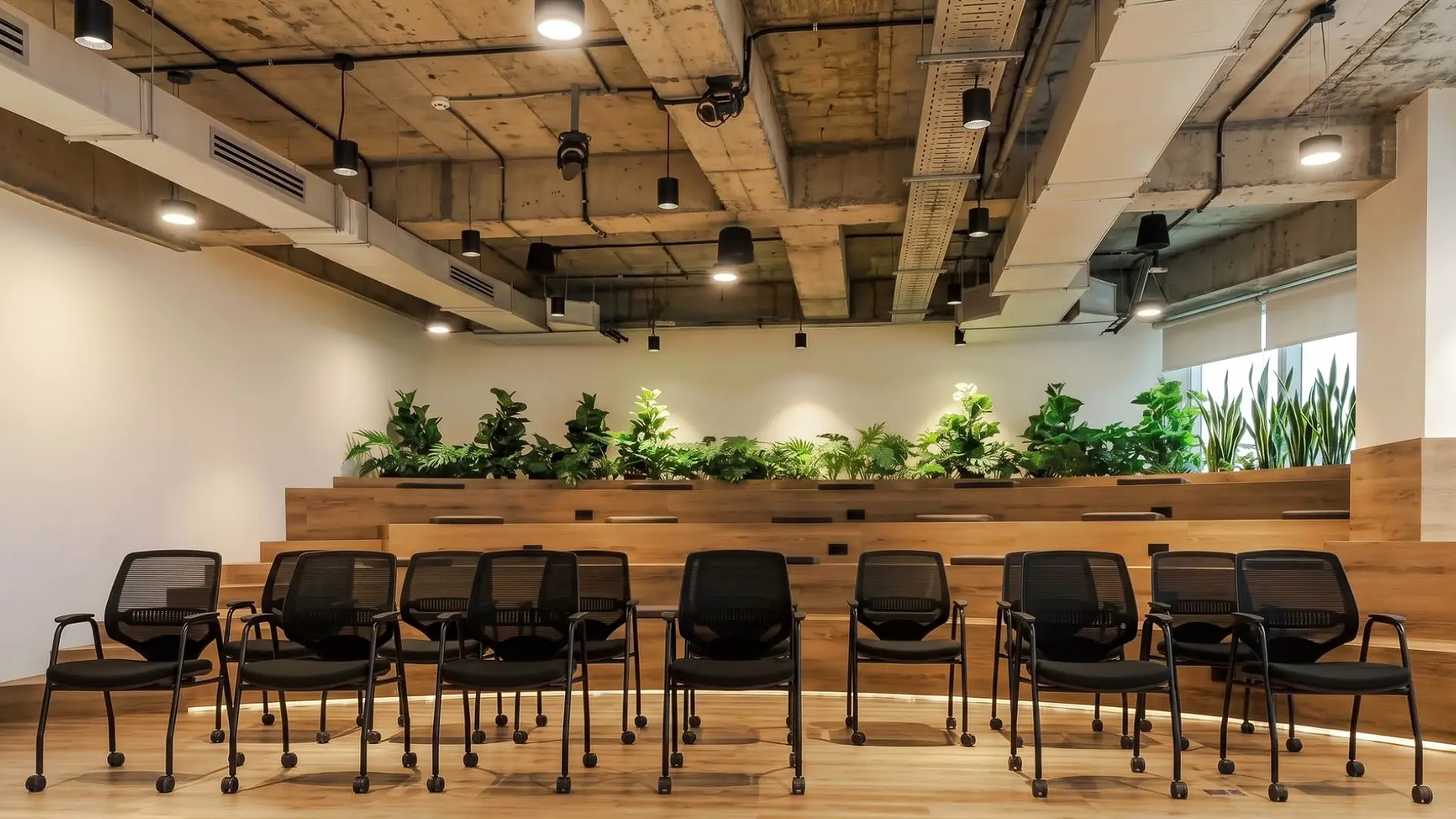
The growing emphasis on learning is also expanding the role of spaces traditionally designed for training and presentations. A corporate auditorium can host lectures, company events, results presentations, product launches, and professional development activities.
Similarly, a training room can accommodate everything from new employee onboarding to workshops, technical demonstrations, and meetings between different departments.
This variety of uses requires careful consideration of infrastructure and furniture characteristics. Seating arrangements, table mobility, the integration of audiovisual resources, and ease of circulation should be planned according to the nature of the activities.
In some cases, a room with mobile, modular furniture provides the necessary flexibility. In others, a fixed auditorium layout may be better suited to the intended use. What matters is recognizing that these environments can become part of an organization’s everyday strategy for professional development and knowledge sharing.
Learning Together as a Reason to Be in the Office
Hybrid work has introduced new ways of organizing professional routines, while also encouraging a broader reflection on the purpose of corporate spaces. If certain individual activities can be carried out from different locations, in-person gatherings can be designed to support experiences that benefit from direct interaction.
Participating in training sessions, sharing discoveries, developing skills, and exchanging experiences with colleagues are activities that make physical presence meaningful. In this context, learning is increasingly considered one of the strategic functions of the contemporary workplace.
Workplace architecture is evolving alongside this transformation by incorporating environments that promote interaction, flexibility, focus, and well-being.