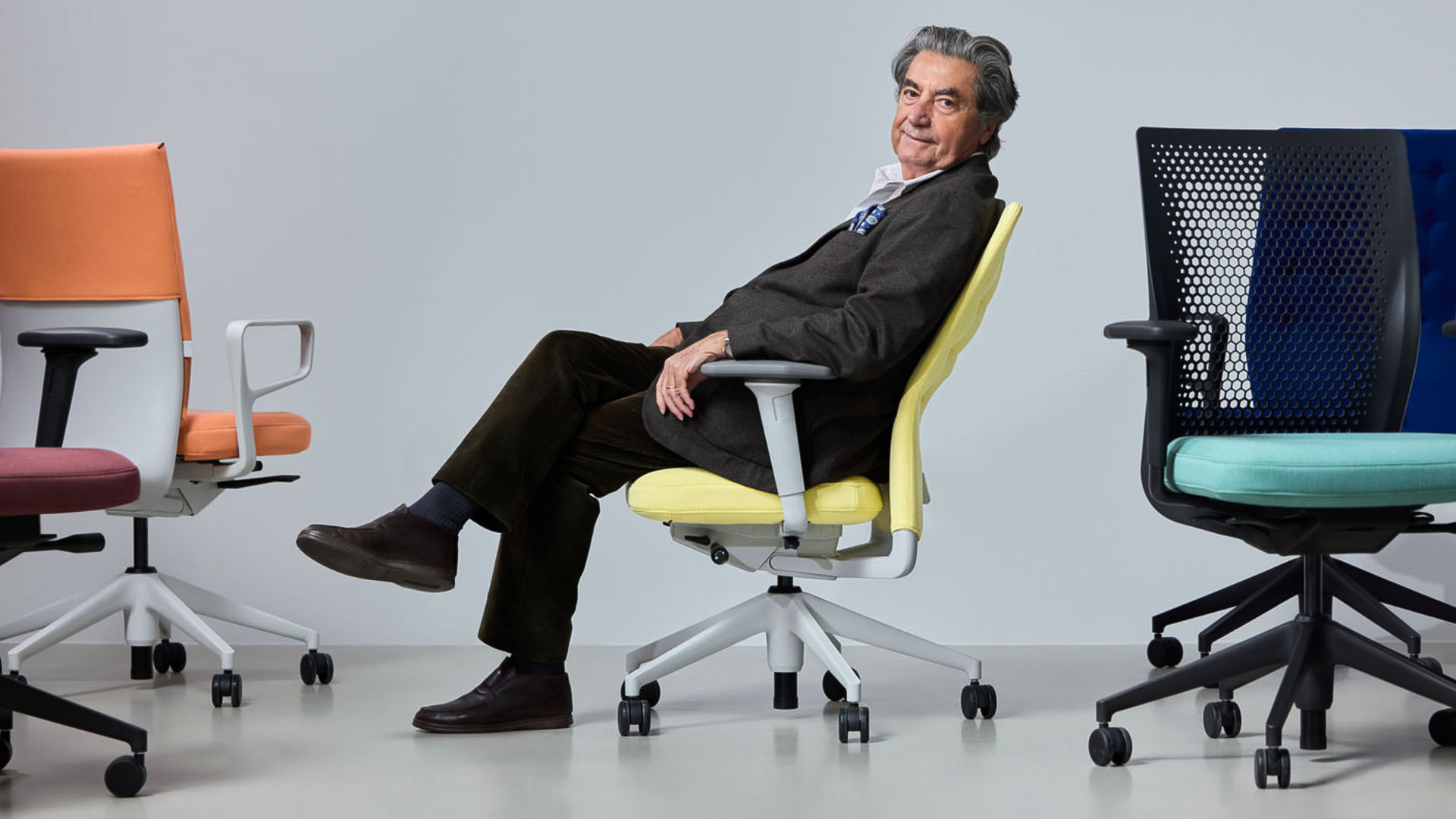
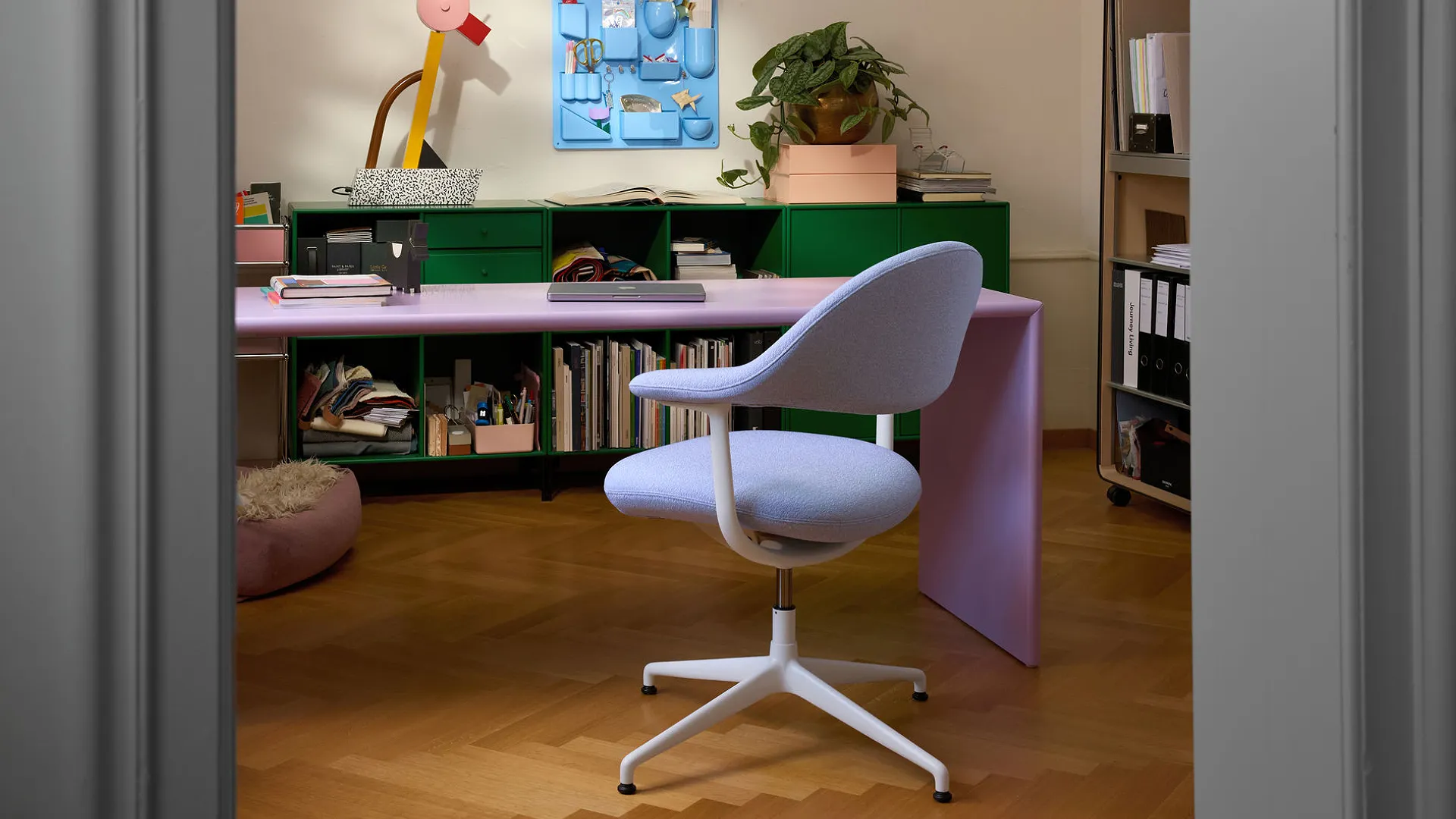
In an interview with Vitra, designer Erwan Bouroullec shares the story behind the creation of Mynt, a chair that combines freedom of movement, elegance, and sustainability to offer a new seating experience.
The way we work, move, and inhabit spaces is constantly evolving. Keeping pace with these changes, Vitra, in collaboration with French designer Erwan Bouroullec, has developed Mynt, a chair that introduces a fresh approach to contemporary ergonomics.
Featuring an innovative mechanism, interchangeable components, and a versatile aesthetic, Mynt was designed to adapt naturally to the body and a variety of environments, from corporate offices to residential spaces.
In an interview with Vitra, Bouroullec shared insights into the challenges of the development process, the decisions that shaped the design, and the importance of movement in the future of furniture.
A Universal Chair Designed for Different Spaces
For Erwan Bouroullec, Mynt represents a significant milestone in his career as a designer. The goal was to develop a chair capable of adapting to different activities, people, and environments without compromising elegance or functionality.
The concept also builds on an exploration that began years earlier alongside his brother, Ronan Bouroullec, through projects such as Joyn and Alcove, both developed for Vitra.
This exploration is rooted in a central idea: ergonomics should not be limited to a single product but should consider the space as a whole and encourage the body’s natural movement.
In this context, Mynt emerges as a piece that complements this vision, offering a dynamic and adaptable seating solution.
Movement as a Design Principle
One of Mynt’s key distinguishing features is its mechanism, developed from a concept proposed by Vitra’s engineers and refined throughout the chair’s design process.
In conventional office chairs, movement typically relies on the synchronized motion of the seat and backrest, with specific positions and adjustments.
Mynt takes a different approach.
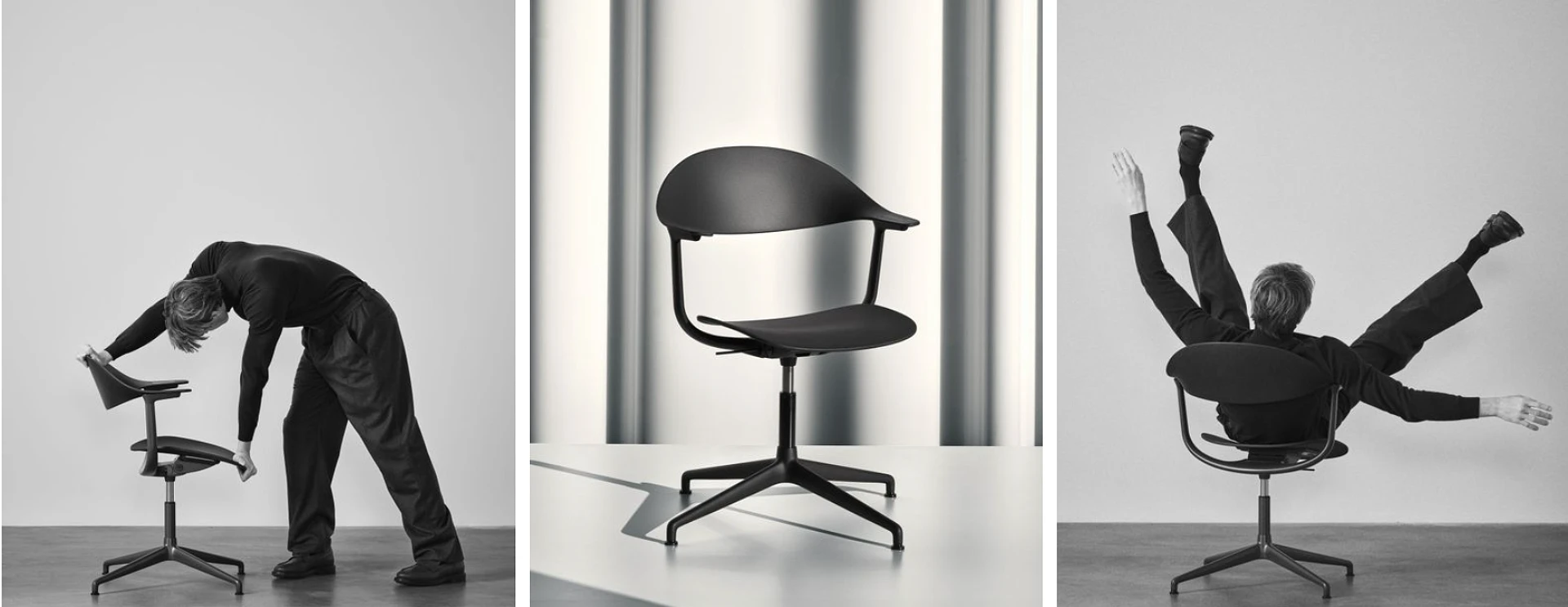
Its mechanism allows the seat to move independently of the backrest’s tilt, naturally adapting to changes in posture throughout the day.
Rather than relying solely on predefined settings, users can control the chair’s movements through their own body movements.
“Instead of having just a few settings, you have a million positions. The body is gliding in the chair.”
Erwan Bouroullec
This freedom of movement creates a dynamic experience in which the chair continuously responds to the way a person sits, works, and moves.
According to Bouroullec, the principle is similar to what happens during everyday activities, such as riding a bicycle or walking up and down stairs, when the body makes small adjustments naturally and instinctively.
Where Ergonomics and Elegance Come Together
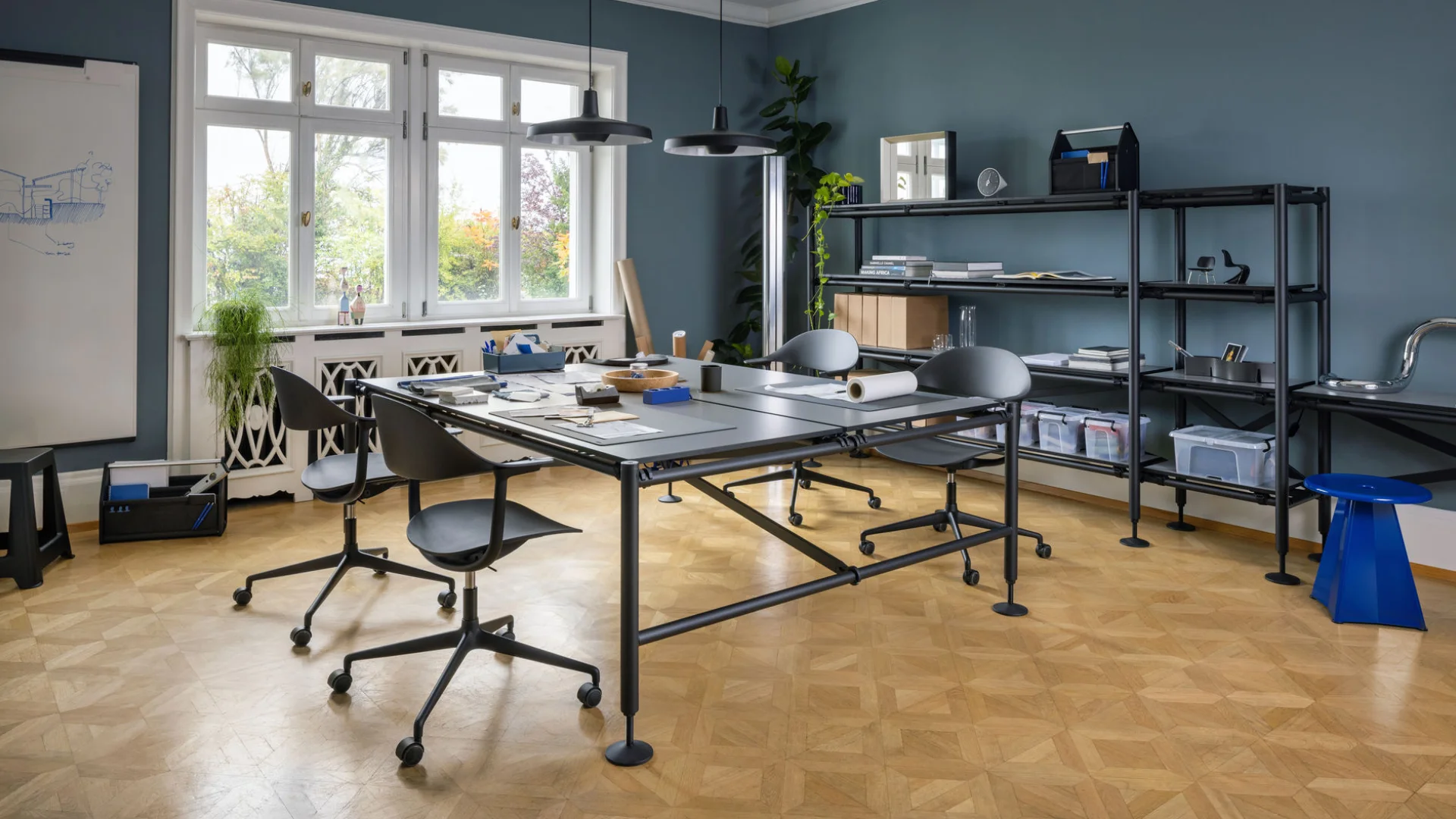
Developing a chair with an innovative mechanism presented a significant challenge: ensuring that technology did not overshadow the aesthetic experience. For Bouroullec, functionality needed to be seamlessly integrated into a welcoming visual language, making Mynt inviting in a variety of settings.
Movement, therefore, influenced not only how the chair functions but also its form.
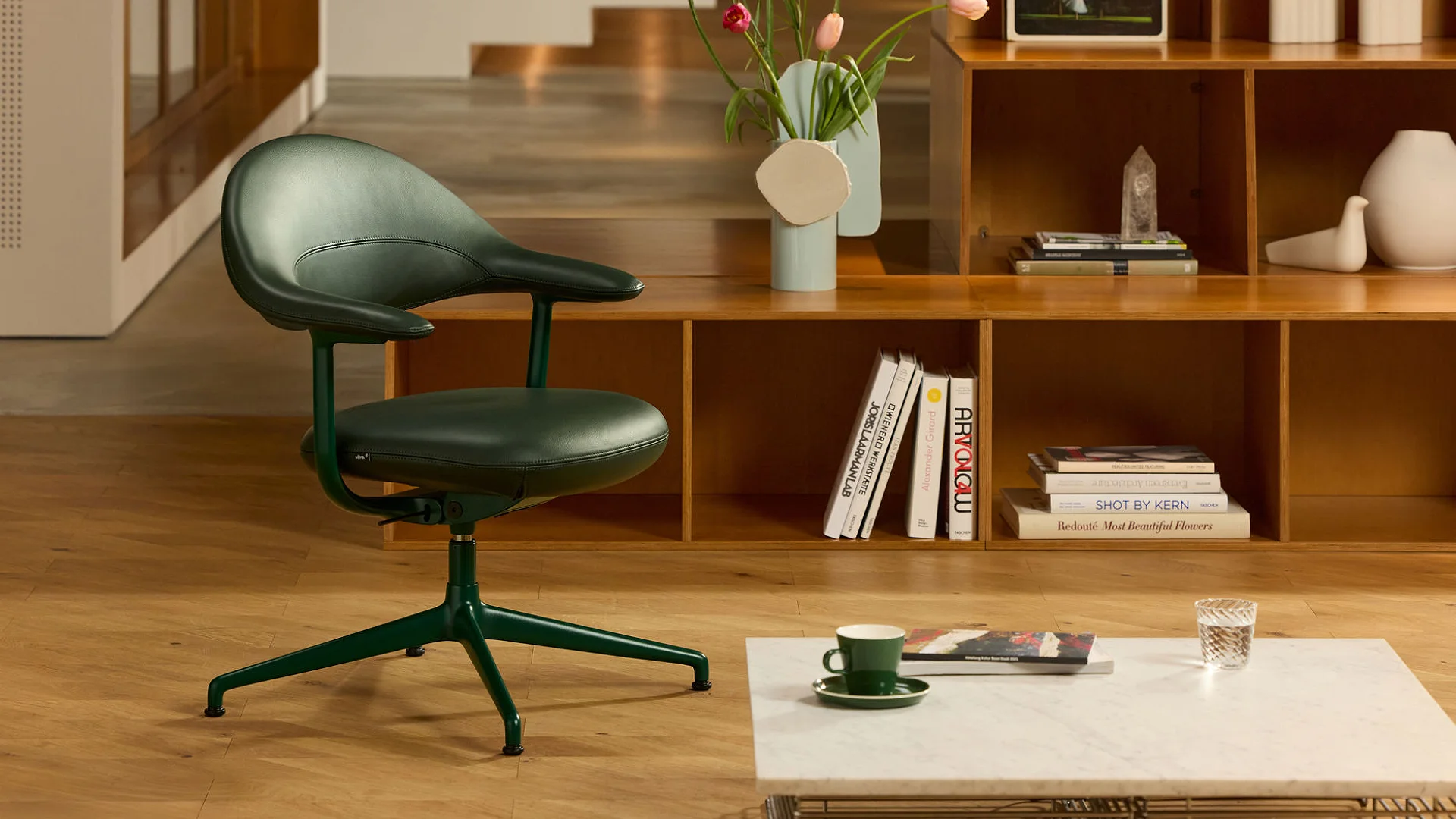
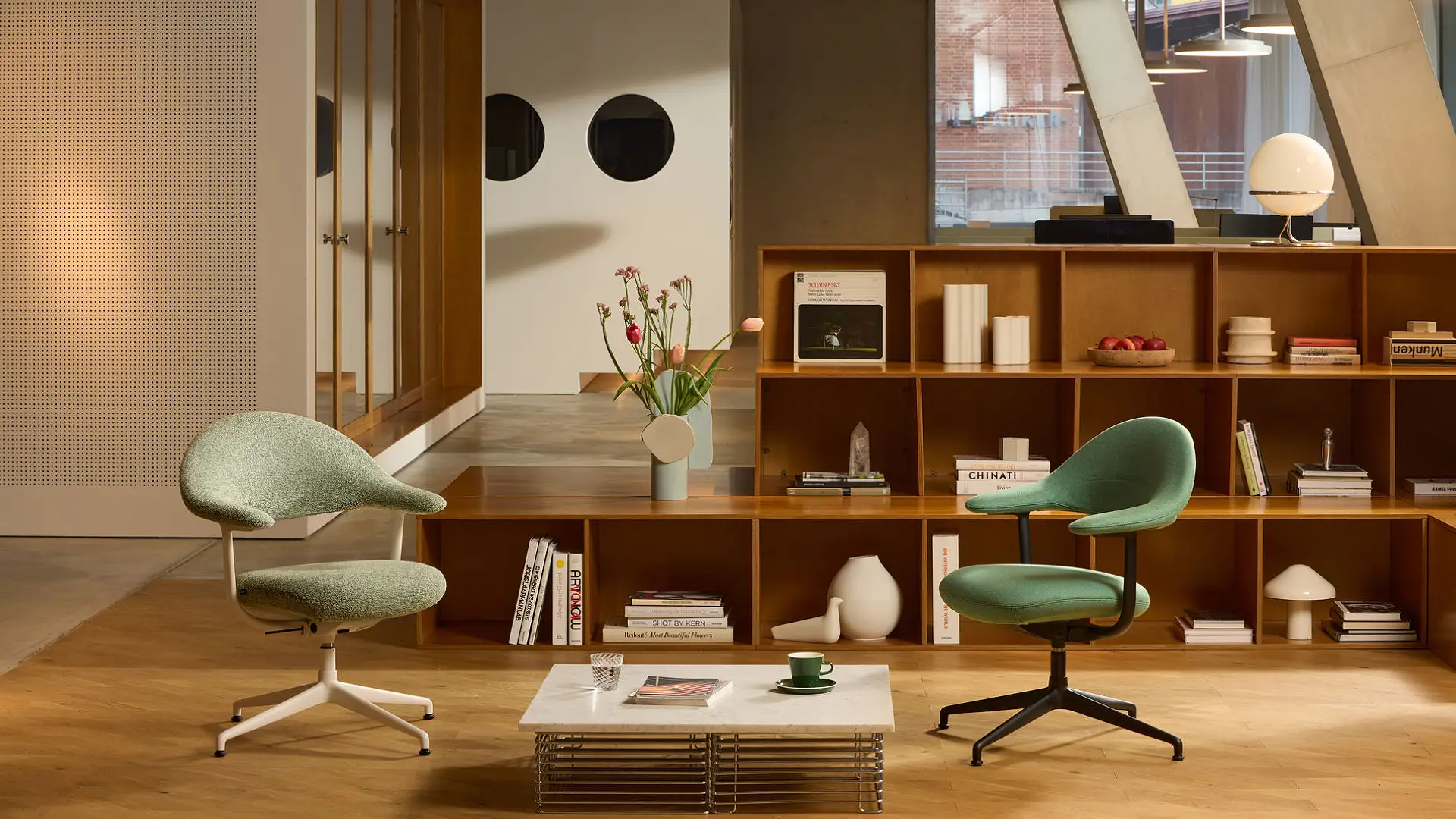
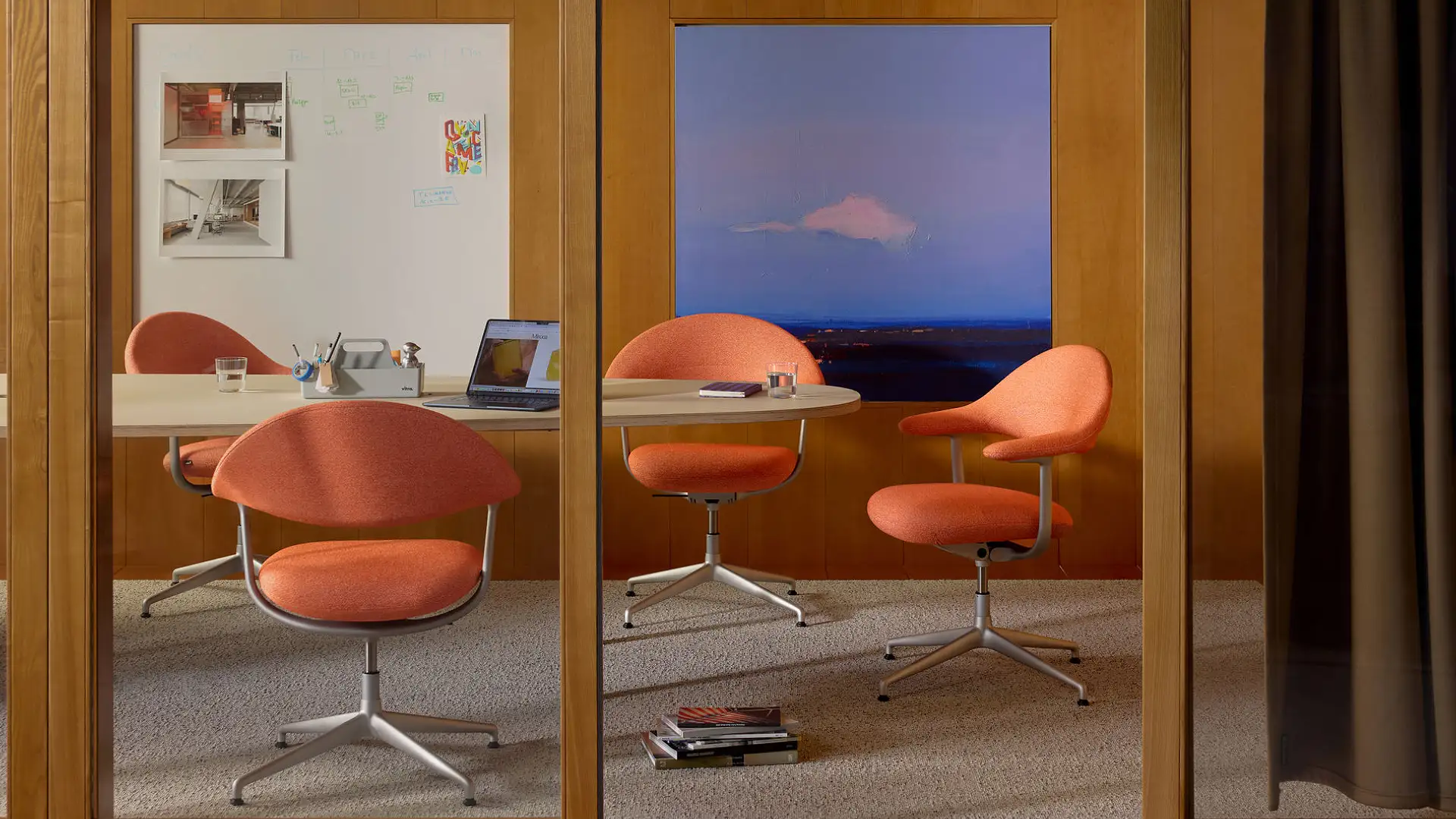
The result is a design characterized by clean lines and balanced proportions, allowing Mynt to transition effortlessly between corporate offices, meeting rooms, collaborative spaces, and residential interiors.
This versatility reflects a growing trend in contemporary architecture: the convergence of residential comfort and workplace functionality.
Sustainability from the Outset
Environmental considerations were integrated into the development of Mynt from the very beginning.
Inspired by the construction principles of a bicycle, Bouroullec adopted an approach based on mechanical, detachable, and replaceable components. The chair was designed without relying on adhesives or permanent fastening systems between its main components.
This approach allows individual parts to be removed, repaired, replaced, or upgraded, extending the product’s lifespan.
Key features of the design include:
- Recycled materials: The use of recycled aluminum, plywood, and recycled glass-fiber-free polyamide.
- Interchangeable components: The ability to replace individual elements and adapt certain chair configurations.
- Removable upholstery: Covers that can be easily removed using zippers for cleaning or replacement.
- Recyclable foam: A seat featuring polyurethane foam developed by Vitra in collaboration with BASF, with a focus on making recycling economically viable.
- Ease of maintenance: A construction that facilitates repairs and upgrades over time.
The absence of glass fibers in the polyamide also makes recycling easier, helping preserve the material’s quality through subsequent cycles of use.
The concept is simple: a durable product should allow for maintenance, adaptation, and renewal, avoiding unnecessary replacements.
One Chair, Multiple Possibilities
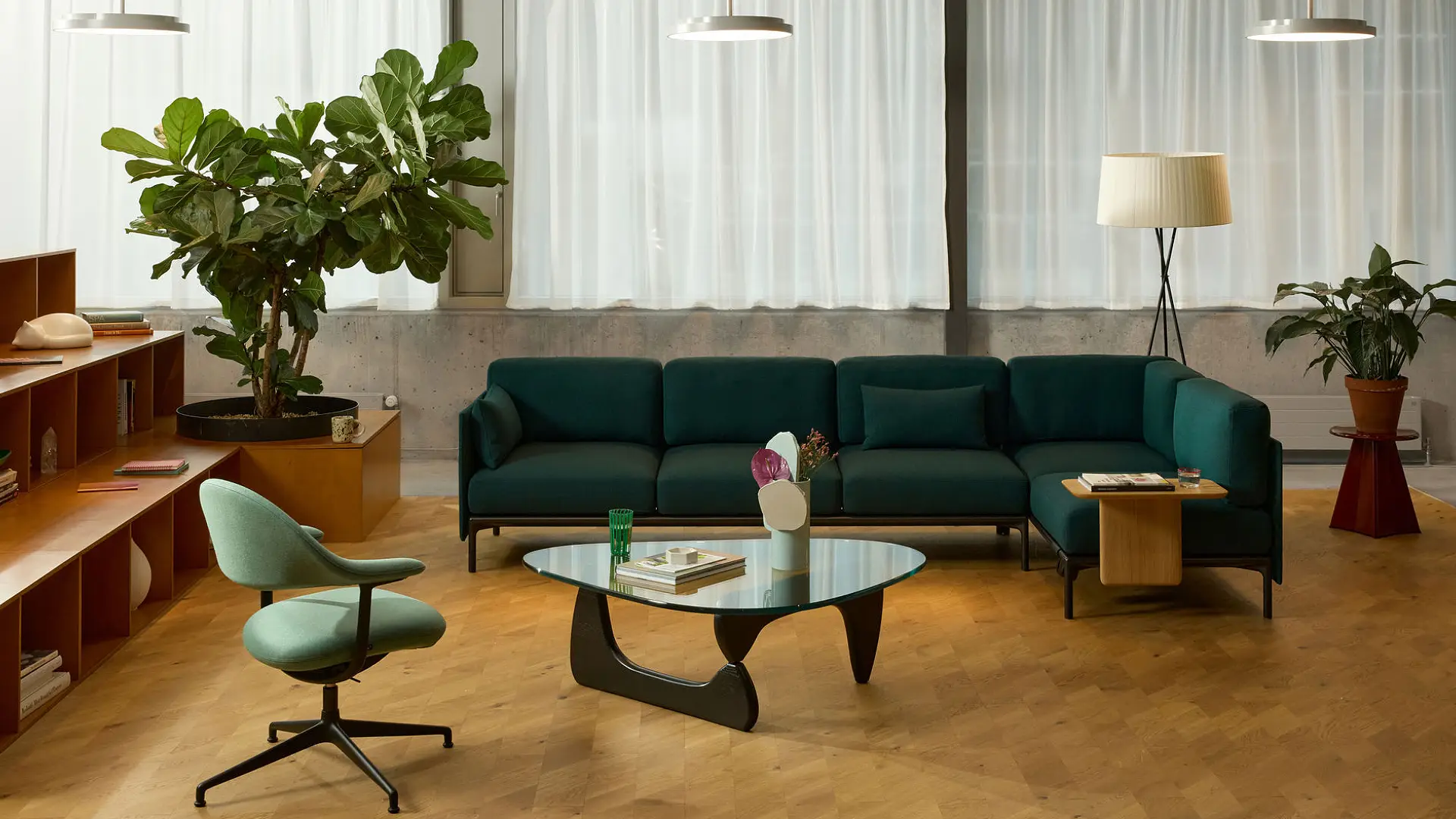
Mynt’s versatility is also reflected in its range of configuration options. The chair is available in different finishes and materials, allowing its appearance and functionality to be tailored to the needs of each space.
Among the possibilities highlighted by Bouroullec are replacing wooden components with plastic or upholstered alternatives and converting certain caster bases into versions with glides.
Another important feature is the ability to significantly restrict the chair’s movement through a locking mechanism. This makes it suitable for situations that require greater stability, such as meeting rooms and dining areas.
The goal is to offer a product that can adapt to changing needs throughout its lifespan.
The Future of Ergonomics Lies in Freedom of Movement
Mynt represents a new perspective on the role of furniture in contemporary spaces. Rather than viewing ergonomics simply as a set of adjustments, the design emphasizes the importance of allowing the body to naturally find different positions.
This approach aligns with increasingly flexible work environments, where people alternate between activities, postures, and forms of interaction throughout the day.
By bringing together movement, structural simplicity, sustainability, and versatility, Mynt demonstrates how design can foster a more intuitive relationship between people, objects, and spaces.
For Erwan Bouroullec, fully understanding this experience requires one essential thing: experiencing the chair firsthand.
Discover Mynt by Vitra
At Pett Capellato, we explore furniture solutions that combine design, innovation, and functionality to transform corporate environments.
Mynt embodies this approach by offering a fresh perspective on ergonomics, adaptability, and furniture longevity.
Explore the possibilities of Mynt and discover how it can be incorporated into a variety of projects and workspaces.
Source: Vitra. Interview “A Visit to Erwan Bouroullec’s Studio,” discussing the development of the Mynt chair.