by Luiz Carlos Pett
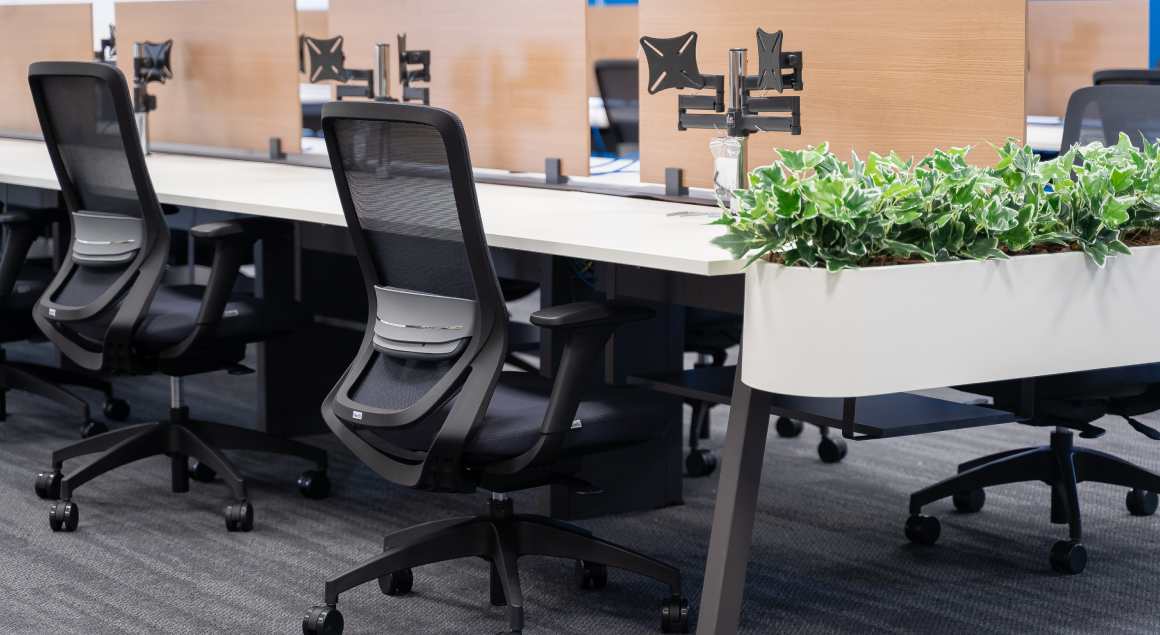
In a market where the war for talent is intense and the pursuit of productivity is relentless, many companies focus on salaries and benefits while overlooking one of the most powerful assets for success: the workplace environment itself. The physical space where employees spend much of their day is far more than an operational cost; it is a strategic tool that, when well designed, directly impacts a company’s competitiveness, profitability, and its ability to attract and retain top talent.
This analysis, grounded in research from renowned institutions such as Harvard, Gallup, McKinsey, Cornell University, and the World Green Building Council, explores both the tangible and intangible elements of the workplace—from organizational culture to furniture—and reveals how each detail contributes to building a high-performance organization.
The Foundation of Performance: Culture and Engagement
Before exploring the physical elements, it is essential to understand that they operate on a cultural foundation. Values such as psychological safety, diversity and inclusion, recognition, and opportunities for development form the basis of a thriving workplace. Companies that cultivate this cultural foundation already observe impressive results:
- 23% higher profitability and 14–18% higher productivity in engaged teams.
- A 36% greater likelihood of financially outperforming competitors when leadership teams are ethnically diverse.
The physical environment, therefore, does not replace a strong culture; rather, it amplifies it by translating abstract values into concrete, everyday experiences for employees.
Core Values for a High-Performance Work Environment
To foster engagement—and consequently competitiveness and profitability—companies must cultivate a workplace grounded in a clear set of values. Research points to the following pillars as the most critical:
- Psychological Safety: The belief that individuals can express themselves without fear of punishment or humiliation. In a psychologically safe workplace, employees feel comfortable asking questions, admitting mistakes, offering new ideas, and challenging the status quo.
- Diversity, Equity, and Inclusion (DEI): Companies with leadership teams that are diverse in terms of gender and ethnicity are more likely to financially outperform their less diverse peers.
- Recognition and Appreciation: Acknowledging good work is one of the most effective and low-cost ways to increase employee engagement and retention.
- Training and Development: Investing in employee development not only improves their skills but also signals that the company values their long-term growth and contribution.
- Work–Life Balance and Flexibility: Demand for greater workplace flexibility has grown exponentially. Companies that offer it attract a broader talent pool and tend to experience lower turnover.
- Competitive Compensation and Benefits: Although culture and the workplace environment are fundamental, compensation and benefits remain crucial factors in attracting and retaining talent.
The Tangible Impact of Space: Key Elements of Corporate Design
A well-designed workplace is a complex ecosystem in which each element plays a vital role in employee well-being and productivity. Let us examine the most critical components:
1- Furniture and Ergonomics: Comfort that Drives Productivity
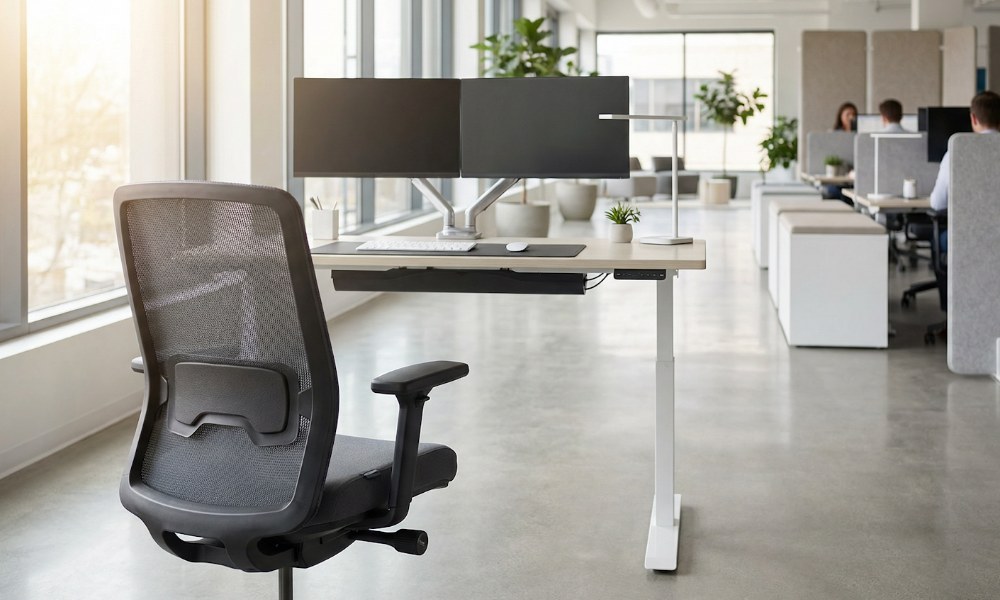
We spend hours seated, and the quality of our furniture—especially chairs—has a direct impact on our health and performance. Ergonomics is not a luxury but a necessity for preventing musculoskeletal disorders (MSDs), which are among the leading causes of absenteeism and reduced productivity.
- Ergonomic Chairs: A properly designed chair, with lumbar support and adjustable height and armrests, not only helps prevent pain and injuries but also improves concentration and reduces fatigue. Employees who use ergonomic furniture tend to demonstrate greater focus and sustained energy throughout the day.
- Flexible Furniture: The rise of height-adjustable desks (sit–stand desks) reflects the need for movement in the workplace. Alternating between sitting and standing improves circulation, reduces discomfort, and increases energy levels.
Investment in ergonomic furniture translates directly into healthier employees, higher productivity, and reduced costs associated with absenteeism and workplace injuries.
2 – Lighting: Light as a Nutrient for the Brain
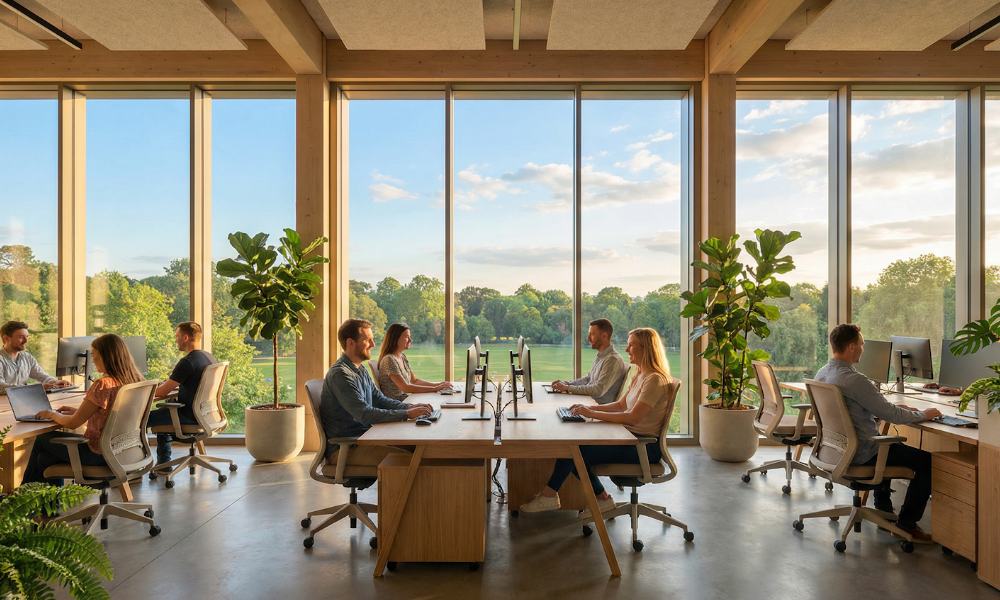
Lighting, both natural and artificial, is one of the environmental factors that most strongly influences human performance. It regulates our circadian rhythm—the biological clock that controls our sleep and wake cycles.
- Natural Light: Exposure to natural light is essential. A study from Cornell University found that workers in environments with natural light reported an 84% reduction in issues such as headaches, eye strain, and blurred vision. In addition, natural light improves sleep quality, mood, and energy levels.
- Strategic Artificial Lighting: When natural light is insufficient, artificial lighting should be designed to replicate its effects. Cooler, bluish-toned lighting (around 4000–5000K) in the morning can increase cognitive performance and help maintain alertness throughout the workday.
3 – Acoustics: The Silence Required for Concentration
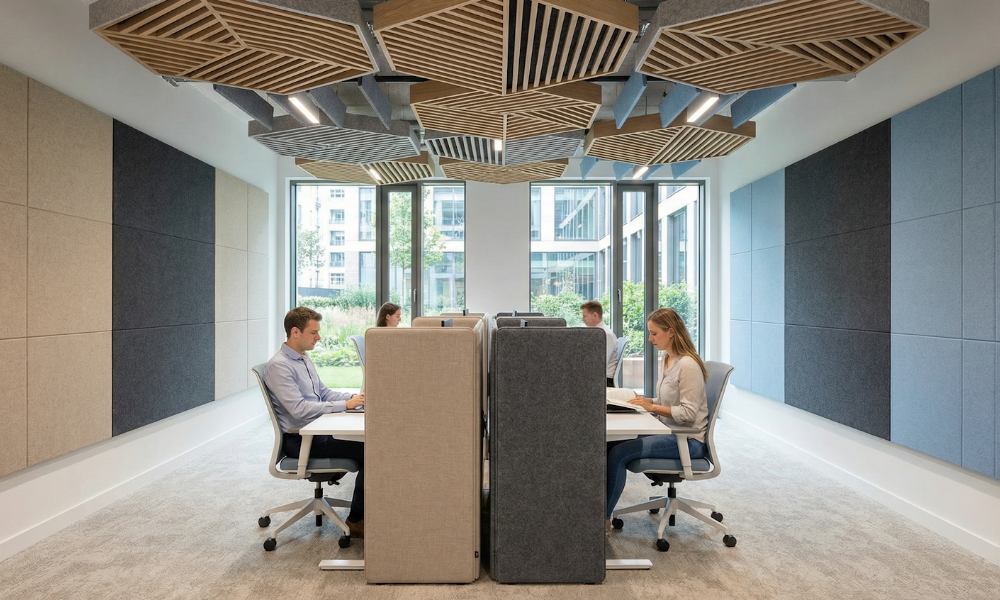
Noise is one of the greatest productivity thieves in the modern workplace, especially in open-plan offices. The World Green Building Council reports that background noise can lead to productivity drops of up to 66%.
Effective acoustic design uses a combination of strategies to create a balanced sound environment:
- Absorption: The use of materials such as carpets, acoustic wall and ceiling panels, and upholstered furniture to absorb sound.
- Blocking: Partitions and intelligent layouts that limit the propagation of noise.
- Masking: Sound systems that emit a soft, uniform background noise, making human speech less intelligible and therefore less distracting.
An acoustically comfortable environment allows employees to concentrate deeply, work more efficiently, and experience lower levels of stress and mental fatigue throughout the workday.
4 – Thermal Comfort: The Right Temperature for Peak Performance
Office temperature is a common source of complaints—and for good reason. Research shows that cognitive performance is optimized within a specific temperature range, typically between 21°C and 22°C. Temperatures above or below this range can lead to a significant drop in productivity, as the body expends energy trying to warm up or cool down instead of focusing on tasks.
5 – Biophilia: The Revitalizing Connection with Nature
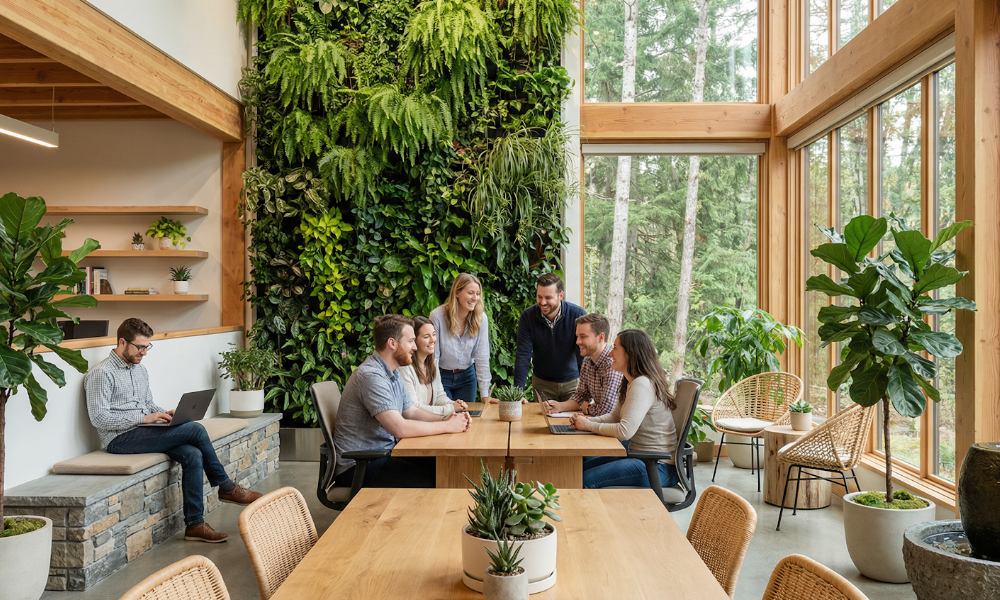
Biophilia refers to our innate tendency to connect with nature. Integrating natural elements into the workplace—known as biophilic design—has profound effects on well-being and productivity.
- Elements: Plants, green walls, water features, the use of natural materials such as wood and stone, and views of outdoor landscapes.
- Benefits: Studies show that biophilic design can reduce stress, enhance creativity, increase well-being by about 15%, and boost productivity by around 6%.
The Synthesis: Creating High-Performance Ecosystems
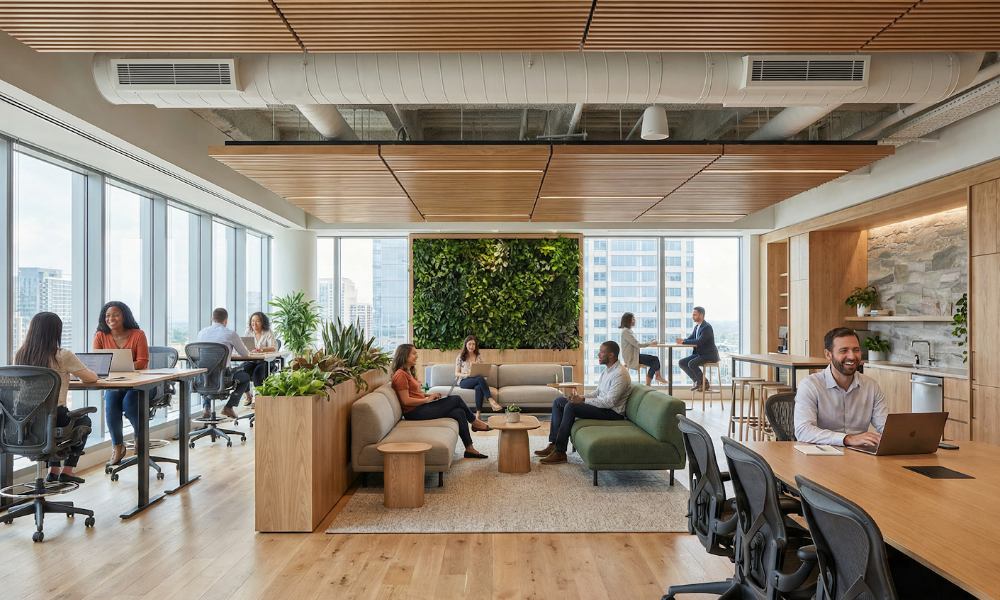
Individually, each of these elements has a significant impact. However, their true power lies in their harmonious integration. An office that combines ergonomic furniture, human-centered lighting, controlled acoustics, comfortable temperature, and a touch of nature is not just a pleasant place to be—it is an ecosystem designed for success.
Investing in the physical work environment is an investment in a company’s most valuable asset: its people. By creating a space that promotes health, well-being, and focus, organizations unlock the full potential of their teams, leading to greater innovation, stronger competitiveness, and ultimately sustainable and profitable growth.